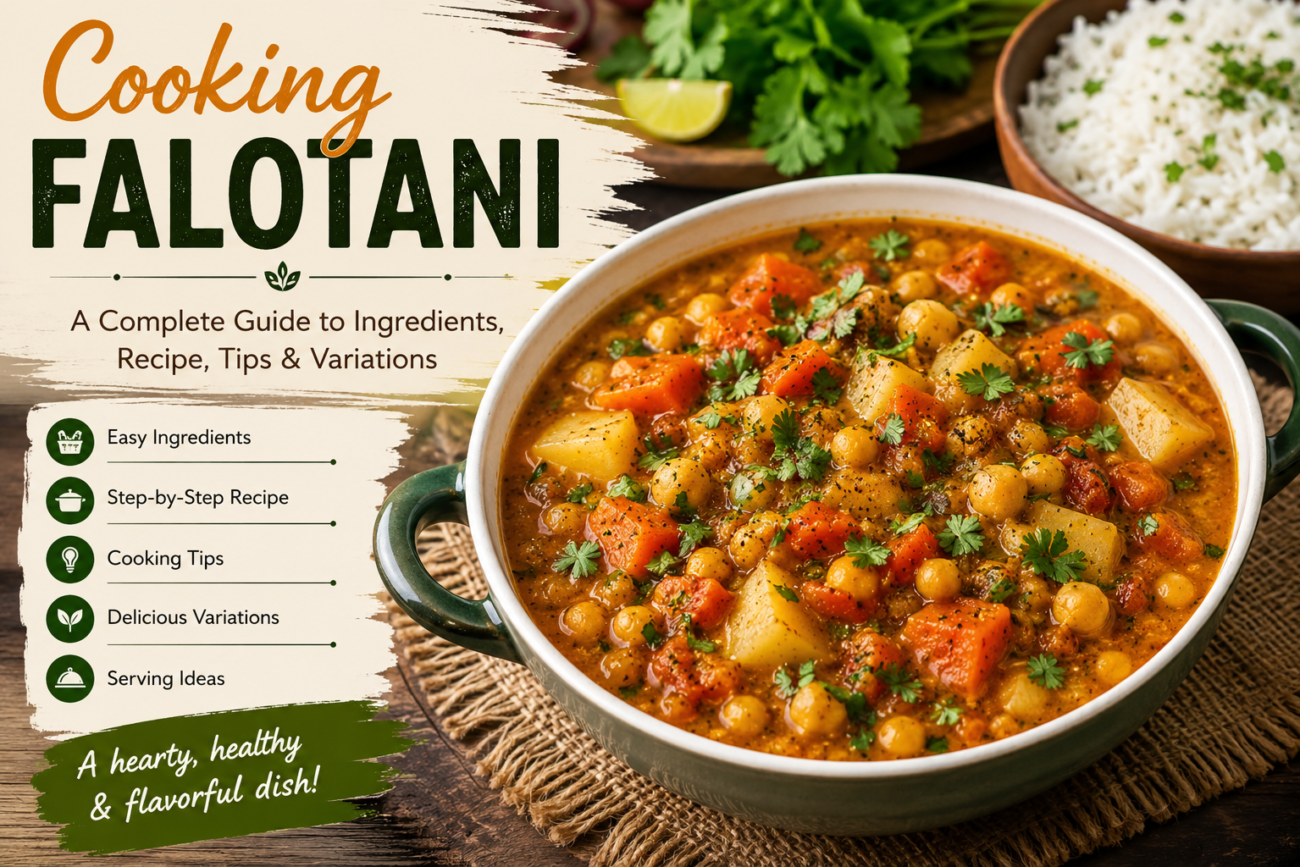
Cooking falotani is becoming an interesting topic among home cooks who enjoy trying unique recipes with simple ingredients. Although there is limited verified information about its exact history, many online food enthusiasts describe it as a comforting, slow-cooked dish that combines vegetables, aromatic spices, herbs, and a flavorful broth. Its flexible nature allows every cook to prepare it according to personal taste, making it suitable for family dinners, meal prep, or special weekend meals.
Unlike recipes with strict traditional rules, cooking falotani encourages creativity. Some versions are entirely vegetarian, while others include chicken, seafood, tofu, or legumes. Regardless of the variation, the goal remains the same: preparing a wholesome, satisfying meal that develops rich flavor through gentle cooking. This guide explains everything you should know, including ingredients, cooking methods, serving ideas, nutritional value, and practical cooking tips.
What Is Cooking Falotani?
Cooking falotani refers to preparing a hearty homemade dish using fresh vegetables, mild spices, herbs, and a cooking liquid such as vegetable broth or coconut milk. Since no officially recognized recipe exists, different cooks create their own versions while following similar cooking techniques.
The dish has become popular because it is simple to prepare and easy to customize. Whether someone prefers a vegetarian meal or a protein-rich dinner, the recipe can be adjusted without losing its comforting appeal. Many people enjoy the balanced combination of vegetables, spices, and slow cooking, which creates deep flavors without requiring complicated techniques.
Is Falotani a Traditional Dish?
One important fact to understand is that Falotani does not have a clearly documented culinary history. Various online sources suggest different origins, but none are supported by reliable historical references. For that reason, it is more accurate to describe Falotani as a modern internet-popularized recipe rather than a traditional national dish.
Despite this uncertainty, many home cooks have embraced the recipe because it focuses on wholesome ingredients, flexible preparation, and comforting flavors. Its growing popularity demonstrates how creative recipes can spread through online cooking communities even without centuries of history.
Ingredients Needed for Cooking Falotani
One of the reasons this recipe attracts beginners is that it uses everyday kitchen ingredients. Most versions include fresh vegetables, herbs, and common spices that are available throughout the year.
Typical ingredients include:
- Onion
- Garlic
- Fresh ginger
- Tomatoes
- Carrots
- Potatoes
- Bell peppers
- Chickpeas or lentils
- Vegetable broth
- Coconut milk (optional)
- Turmeric
- Ground cumin
- Coriander powder
- Black pepper
- Salt
- Olive oil
- Fresh parsley or cilantro
Optional ingredients include:
- Chicken
- Tofu
- Paneer
- Fish
- Mushrooms
- Spinach
- Green peas
These ingredients can be adjusted according to dietary preferences and seasonal availability.
Step-by-Step Cooking Falotani Recipe
Preparing this dish is straightforward, making it suitable even for beginners.
Start by heating olive oil in a heavy cooking pot over medium heat. Add finely chopped onions and cook until they become soft and lightly golden. Stir in garlic and ginger, allowing them to release their aroma before adding turmeric, cumin, coriander, black pepper, and a small amount of salt.
Next, add chopped tomatoes and cook until they soften into a thick base. Mix in carrots, potatoes, peppers, and any additional vegetables you prefer. If using chickpeas, lentils, tofu, or chicken, add them during this stage.
Pour vegetable broth or coconut milk into the pot and stir thoroughly. Cover the pot and allow everything to simmer gently for approximately forty-five minutes. Stir occasionally while checking the consistency.
When all vegetables become tender and the broth thickens slightly, finish the recipe with freshly chopped herbs and a squeeze of lemon juice for brightness. Serve immediately while warm.
Why Slow Cooking Makes a Difference
The secret behind the rich taste of cooking falotani lies in slow cooking. Instead of preparing everything quickly over high heat, gentle simmering allows every ingredient to release its natural flavor gradually.
Vegetables absorb the spices more effectively, while the broth develops a deeper taste over time. Slow cooking also creates a smoother texture that makes every bite more satisfying. This method requires patience, but the final result is worth the extra time.
Popular Variations of Falotani
One reason many people enjoy this recipe is its flexibility.
Vegetarian Falotani
This version combines seasonal vegetables, chickpeas, lentils, and aromatic spices. Coconut milk can be added for a creamy texture without using dairy products.
Chicken Falotani
Boneless chicken pieces are cooked slowly with vegetables and spices until they become tender and flavorful. This variation offers extra protein while maintaining the comforting nature of the dish.
Seafood Falotani
Shrimp or white fish can be added during the final stage of cooking to preserve their delicate texture. Fresh herbs and lemon juice complement seafood particularly well.
Vegan Falotani
The vegan version replaces dairy ingredients with vegetable broth and coconut milk while keeping the same cooking process. The result remains rich, creamy, and satisfying.
High-Protein Falotani
Beans, lentils, tofu, or extra chickpeas can increase the nutritional value, making the recipe suitable for active individuals looking for additional plant-based protein.
Best Spices for Maximum Flavor
The flavor profile depends heavily on selecting balanced spices rather than using excessive heat.
Turmeric provides warmth and color.
Ground cumin adds earthiness.
Coriander contributes freshness.
Black pepper creates gentle heat.
Fresh garlic and ginger provide aroma that cannot easily be replaced with dried alternatives.
Fresh herbs added at the end preserve brightness and improve presentation.
Common Mistakes to Avoid
Although the recipe is simple, several mistakes can reduce its quality.
Cooking over high heat may prevent flavors from blending properly.
Adding herbs too early causes them to lose freshness.
Using too much salt during the beginning makes final seasoning difficult.
Skipping the simmering stage prevents ingredients from developing full flavor.
Using old spices often produces a dull and less aromatic meal.
Serving Suggestions
Cooking falotani pairs well with several side dishes that complement its rich texture.
Steamed rice remains the most popular option because it absorbs the flavorful broth beautifully. Warm flatbread also works well for dipping. Fresh cucumber salad provides a refreshing contrast, while plain yogurt balances the spices without overpowering the meal.
For special occasions, roasted vegetables or quinoa can create a complete and nutritious dinner.
Nutritional Benefits
The nutritional profile depends on the ingredients selected, but many versions provide a balanced combination of carbohydrates, fiber, vitamins, minerals, and protein.
Vegetables contribute important antioxidants and dietary fiber that support healthy digestion. Chickpeas and lentils provide plant-based protein while helping increase fullness after meals. Using fresh herbs and moderate amounts of oil creates a wholesome recipe suitable for many balanced eating habits.
Storage and Reheating Tips
Leftover Falotani stores very well, making it an excellent meal-prep option.
Allow the dish to cool completely before transferring it into airtight containers. It can remain fresh in the refrigerator for several days. For longer storage, freeze individual portions.
When reheating, warm slowly over medium heat while adding a small amount of broth or water if necessary. Gentle reheating helps preserve both flavor and texture.
Why So Many Home Cooks Enjoy Cooking Falotani
Many recipes become popular because they combine simplicity with flexibility, and Falotani follows exactly that pattern. It allows cooks to use seasonal vegetables, adjust protein choices, experiment with herbs, and prepare a comforting meal without requiring advanced cooking techniques.
Its ability to adapt to different dietary preferences makes it suitable for families where everyone enjoys slightly different flavors. Instead of following strict rules, every cook can personalize the recipe while maintaining its comforting character.
Conclusion
Cooking falotani is an interesting recipe that continues attracting attention among home cooks looking for flavorful and flexible meals. Although its historical background remains uncertain, its appeal comes from its wholesome ingredients, gentle cooking process, and endless customization options. Whether you prepare a vegetarian version, add chicken, or experiment with your own combination of vegetables and spices, the recipe offers a satisfying meal that is both comforting and practical. With patience, fresh ingredients, and careful seasoning, anyone can enjoy preparing a delicious homemade Falotani.
FAQs
What is cooking falotani?
Cooking falotani refers to preparing a slow-cooked comfort dish using vegetables, spices, herbs, and broth. Recipes vary because there is no single standard version.
Is Falotani a traditional recipe?
There is no verified historical evidence confirming a traditional origin. Most available recipes are shared through modern food blogs and online cooking communities.
Can beginners cook Falotani?
Yes. The recipe uses simple ingredients and basic cooking techniques, making it suitable for anyone with beginner-level kitchen experience.
What can I serve with Falotani?
Steamed rice, warm flatbread, fresh salad, roasted vegetables, or plain yogurt all pair well with the dish.
Can Falotani be stored for later?
Yes. Refrigerate leftovers in airtight containers for several days or freeze individual portions for future meals. Reheat gently before serving.
